
A couple of weeks ago, I attended a talk for women in comedy, and the comedian warming up the crowd before students went up to test their standup routines started asking "would you rather" questions like, "Would you rather lose your keys or your phone?" One of her questions was, "Would you rather go see a movie or a play?" Not a single person in the room said "movie". As a proud AMC A-Lister, I found this incredibly shocking as the crowd went on about how you can watch movies at home but can only experience plays in the theatre. And I love movie theatres, but I will always love live plays more.
My liberal arts college in New York City cut the Theatre Major starting this Fall, making the program unavailable for incoming students and laying off some of the most intelligent and creative people I know. As someone who can’t seem to get away from theatre, I can attest that the long lineage of the art of theatre is just as important today as it was in Ancient Greece before film or photography were developed. My case for theatre -- and one that people seemed to agree with at that comedy talk -- is that it is a shared human experience that allows you to connect with the living, breathing people in the room, both the ones on stage and the ones sitting around you. In Ancient Greece, theatre was seen as a civic gathering that unified the community and aligned the city with the state as a mechanism for civic and moral education. Aristotle called it "catharsis" in Greek tragedy -- a communal release of emotion that results in the purification of the soul. To this day, experiencing live theatre surrounded by bodies made of flesh and bone still has that same effect.
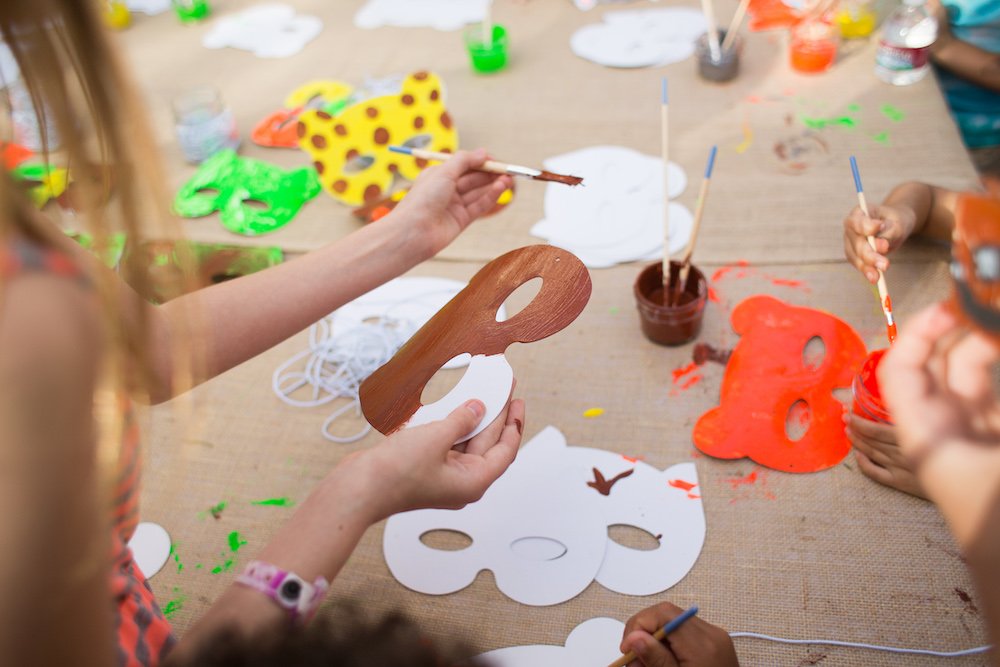
Theatre forces you to be present because no script is ever performed the same way twice. It is unfiltered and unedited, making it more human because there’s always room for mistakes, and once it’s over, it can’t be replayed. Therefore, theatre at its core is about attention, care, and surrender. You experience it with your body, and then it goes away. Having worked as a theatre and dance leader in an after-school program for kids ranging from 6 to 9, I have witnessed how crucial it is for them to experience theatre both as performers and spectators. After watching Toy Story 5 and observing how technology has impacted children's development with the kids I work with, it has become increasingly clear how relevant theatre remains in society and will continue to be, despite new technological advances.
Theatre is a way to express oneself and learn empathy; it's collaborative, and it’s a return to playing make-believe, an ability that kids seem to have lost due to constant stimulation from screens. As the mother of American improv and a strong believer and pioneer in theatre education, Viola Spolin said in her book Improvisation For The Theatre, "The techniques of the theatre are the techniques of communicating." Spolin developed the philosophy of theatre games to awaken/connect with human intuition and provide an opportunity to break free from social norms in a controlled environment. This approach has proven to be a valuable tool in child development and education. Spolin emphasized that, "We learn through experience and experiencing, and no one teaches anyone anything." This highlights the idea that theatre has a somatic effect, enabling us to connect and learn with others and ourselves.
I saw a tremendous change in my kids from the beginning of the school year. At first, they were shy, reluctant to participate, and struggled to understand the concepts of theatre and acting. By the end of the year, however, they've not only thrived in the activities but also built stronger relationships with one another. With the theatre program being cut at my "progressive" college, I am extremely worried that more programs might face similar cuts or become less accessible and popular in the future, without us fully recognizing just how relevant and important the practice of theatre is. Theatre isn’t merely entertainment; it isn’t something that can simply be bought or mechanically reproduced; it is a space that charges social transformation, human connection, and self-expression. All of which will be relevant as long as humans exist.