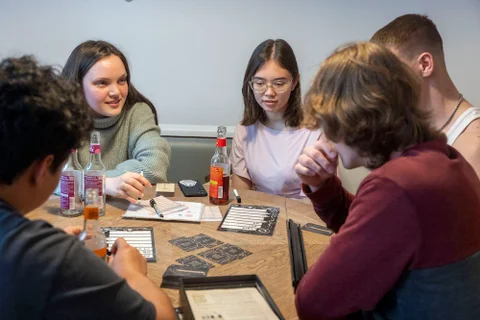

The host handled the shopping, footed the bill, and did the cooking, while guests showed up with a bottle of wine and stayed as long as they liked. Ahead of Thanksgiving this week, however, Gen-Z and Millennial hosts are openly rewriting that playbook — and sparking fierce debate online in the process.
Across social media, candid conversations about modern "Friendsgiving" logistics have ignited heated comment sections over where hospitality ends and over-organizing begins. Rather than absorbing hundreds of dollars in grocery costs alone, younger hosts are rolling out group-chat dish sign-ups, shared Note checklists, itemized Venmo requests for ingredients, and firm start-and-end times on digital invites.

At the center of the trend is money. With grocery costs and rent putting pressure on many twenty- and thirty-somethings, some hosts argue that splitting the bill isn't stingy — it's the only way dinner happens at all. The expectations aren't just playing out online either. An online LendingTree survey of 2,000 U.S. consumers conducted in October found that 60% of potential Thanksgiving hosts expect guests to contribute money or bring food or drinks — a figure that rises to 72% among Gen-Z potential hosts.
Ahead of the holiday, young hosts and creators on TikTok have been vocal about that shift, calling out guests who show up empty-handed or bring only a small contribution while expecting a full spread. Their message: attendees need to start contributing more by bringing substantial dishes to the table.
Supporters of a more budget-conscious approach point out that planning — whether by buying in bulk at stores like Sam's Club or splitting grocery costs in the group chat — keeps hosting affordable and removes awkwardness before guests walk through the door. In the comment sections of these debates, viewers frequently clash over basic hosting etiquette; some side with hosts who share itemized expenses or assign clear contribution tiers, while critics argue that sending a Venmo charge after inviting friends into your home turns a warm gathering into a business transaction and insist that hosts should simply scale back the menu if they can't cover the cost.
Beyond the budget, hosts are rethinking what actually goes on the table. Elsewhere on TikTok, some Gen-Z creators are questioning whether Friendsgiving needs to feature the same traditional dishes guests will soon enjoy with their families. Instead, some are embracing themed potlucks, comfort-food spreads, and more casual grazing menus that give the gathering its own identity.
Structure has also become a major talking point. Increasingly, hosts are moving away from the guesswork of having multiple guests bring the same dish while nobody remembers the plates or ice. Group-chat sign-up threads, shared Note checklists, and digital RSVP trackers allow hosts to balance the menu, account for dietary restrictions, and lock in headcounts days in advance. Even more polarizing is the rise of the explicit dinner-party curfew — invites that read "6:00pm to 9:30pm" instead of leaving the night open-ended. For some busy young adults balancing work, school, and recovery time, a set end time signals clear boundaries rather than an unwelcome rush out the door.
While traditionalists may balk at itemized receipts and scheduled wrap-ups, younger hosts see these boundaries as an evolution of etiquette rather than the death of it. By sharing the workload and setting expectations up front, Friendsgiving becomes less about effortless perfection and more about actually enjoying the people at the table.
Whether guests prefer old-school generosity or modern group-chat organization, one thing is clear: this holiday season, hosting rules are officially up for negotiation.