
You know the look: the dramatic slow-mo, the perfectly timed cuts. What started as fan-made tributes has become the go-to marketing playbook for major studios and artists.
You’ve seen it. That perfectly timed slow-motion shot of a hero turning toward the camera, synced to a swelling synth beat. The rapid-fire jump cuts that convey a whole emotional arc in fifteen seconds. The moody, high-contrast color grade that makes everything feel impossibly epic. For years, this was the signature language of the fan edit, a labor of love crafted by devoted stans on Tumblr, Instagram, and later, TikTok.
But lately, that homespun aesthetic has been showing up in much more official places. It’s in the trailers for the biggest blockbusters, the social media rollouts for superstar albums, and the promos for hit streaming shows. The visual grammar that fans developed to celebrate their favorite media is now being used by the industry to sell it. It’s an uno-reverse card of creative influence, and it proves that the most powerful marketing minds might just be the fans themselves.
A New Visual Vernacular
So, what exactly defines the fan-edit aesthetic? It’s a style that prioritizes emotion and vibe over linear narrative. A traditional movie trailer is designed to explain a plot: A happens, so B must happen, but then C gets in the way. A fan edit, on the other hand, is designed to capture a feeling. It isolates moments of peak emotional resonance—a longing stare, a triumphant smirk, a tearful embrace—and weaves them together with a carefully chosen soundtrack.
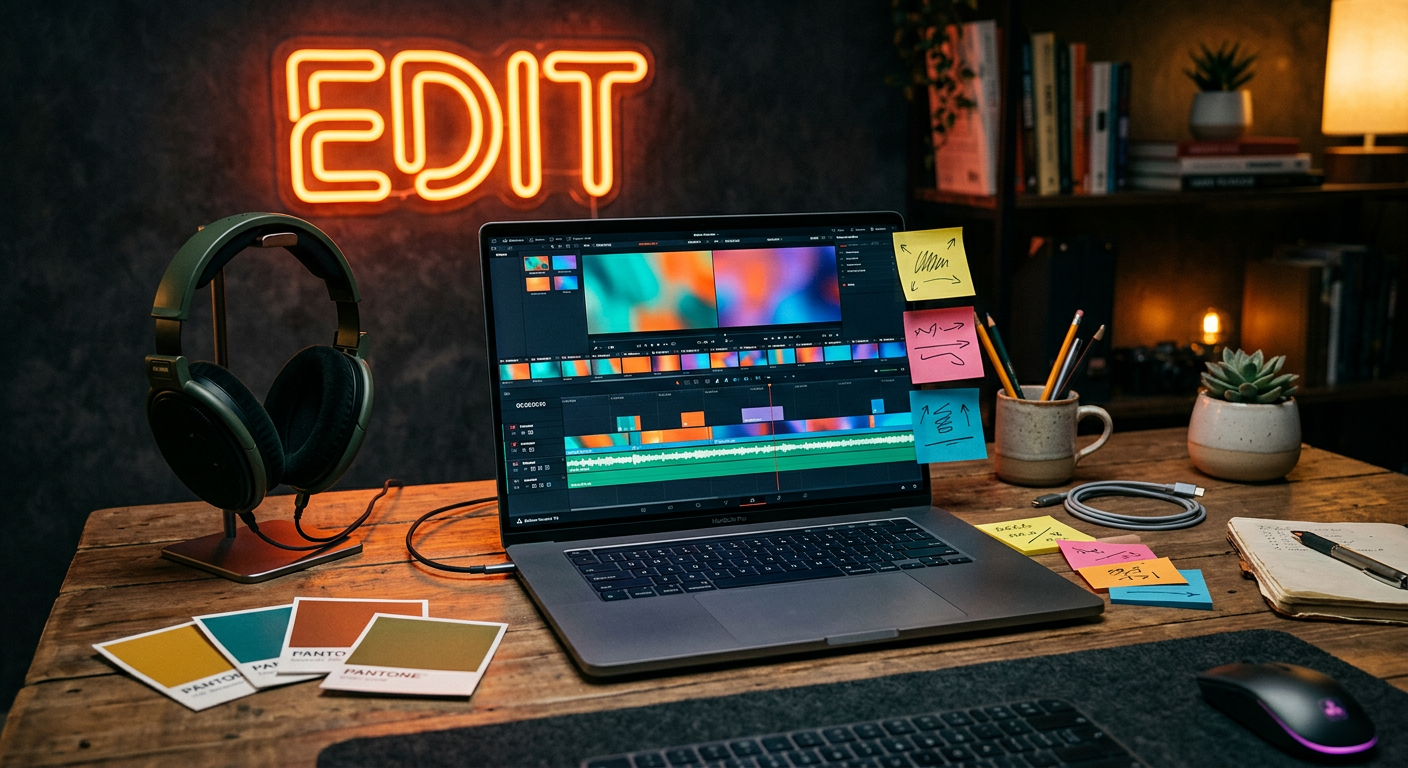
The techniques are specific and recognizable. Heavy use of speed-ramping, where a clip slows down dramatically and then speeds back up, heightens the impact of a single gesture. Cuts are made on the beat, transforming a collection of scenes into a rhythmic, almost dance-like experience. Text captions don't just convey dialogue; they appear and disappear with the music, becoming part of the visual tapestry. It's a style born from digital tools, but more importantly, from a deep, forensic love of the source material.
This language is perfectly calibrated for the platforms where it was born. It’s short, rewatchable, and shareable. It gives you the emotional payoff without the two-hour commitment, making it the ideal format for a world of scrolling feeds and short attention spans. It’s no wonder that marketing departments at major studios and record labels finally started taking notes.
The Hollywood Treatment
Look at the marketing for almost any major film or television series today, and you’ll see the DNA of a fan edit. Trailers have become less about explaining the story and more about selling a mood. They often feature a non-diegetic pop song, frequently a slowed-down, ethereal cover, that sets a specific tone. Instead of following a chronological sequence, these trailers are a montage of powerful moments, often completely out of context, designed to generate hype and speculation.
The goal is no longer to get you to simply understand the plot. It’s to make you feel something so strongly that you’re compelled to share the trailer, to dissect it frame by frame, and to become part of the conversation. Studios have realized that a 30-second clip of a beloved character looking heroic, cut to a killer beat-drop, can do more to energize a fanbase than a hundred press releases. They’re not just making ads; they’re creating the raw material for the next wave of fan content.
The Music Industry Catches the Beat
Nowhere is this trend more apparent than in the music industry. An album rollout is no longer just a lead single and a music video. It's an entire visual campaign, executed across social platforms, and its aesthetic is pure fan-edit. Artists like Billie Eilish and Taylor Swift have mastered the art of the tease, dropping cryptic, beautifully edited short clips that feel like they could have been made by a fan account.
These snippets are meticulously crafted. Glitchy transitions, vintage filters, and text overlays that hint at song themes are all part of the playbook. When an artist posts a 15-second Reel of them lip-syncing to a new track in a grainy, color-graded video, they are speaking the same visual language as their most dedicated followers. It’s a brilliant strategy: it validates the fans' creative instincts while simultaneously providing them with high-quality content to remix into their own edits.
This creates a powerful feedback loop. The more official content mimics the fan style, the more fans feel seen and engaged, and the more they create. The line between promotional material and user-generated content blurs, turning a marketing campaign into a massive, collaborative art project. The artist isn’t just broadcasting to their audience; they are in a creative dialogue with them.
This isn't a case of a corporation co-opting a subculture. It feels more like a long-overdue acknowledgment of where popular culture is truly forged: in the digital spaces where fans express their passion. The industry has finally realized that to connect with a young audience, you have to speak their language. And as it turns out, that language was invented, perfected, and distributed by the fans themselves.
So the next time you see a trailer that gives you chills or a music video teaser that you can’t stop watching, take a moment to appreciate the artistry. It might have been signed off on in a boardroom, but its soul was born on a fan’s laptop.
On This Topic
UP NEXT ON TAYLOR SWIFT

MUSIC SHOP