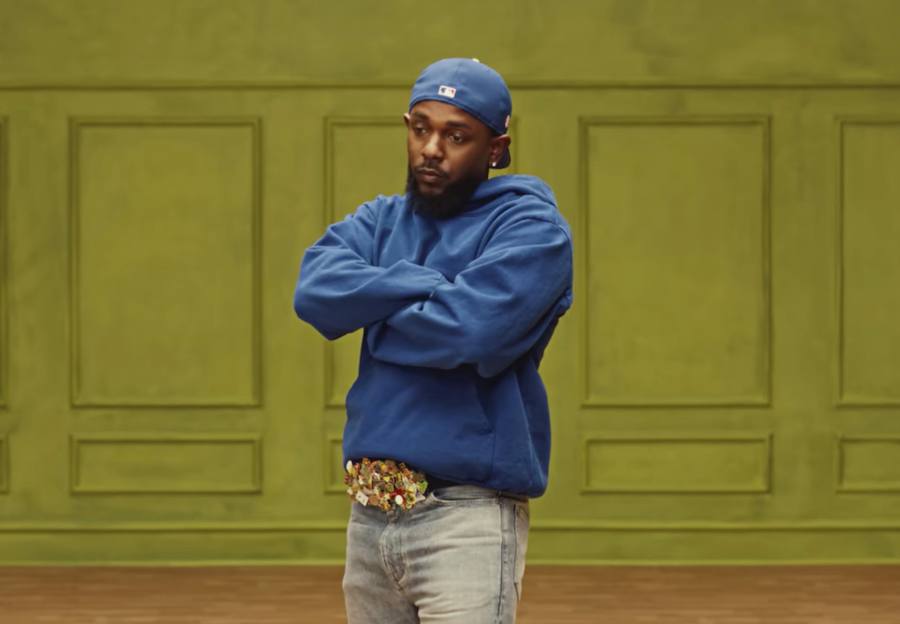


In an era of fleeting singles, Kendrick Lamar treats his albums like feature films. With complex narratives, stunning visuals, and immersive live shows, he rewards deep listening.
We live in the age of the single. The algorithm feeds us an endless stream of decontextualized moments, and artists are incentivized to create for virality, not necessarily for posterity. Here at Young Hollywood, we see it every day. But then there’s Kendrick Lamar, an artist who seems to be playing a completely different game, on a completely different field. While the industry churns out disposable hits, he’s busy building monuments.
Lamar doesn’t just release collections of songs. He delivers complete, self-contained worlds. Each project is an event, a dense text that feels more akin to a season of prestige TV or an auteur film than a standard album. It’s a challenging approach in a world that prioritizes instant gratification, but it’s one that has cemented his status as one of the most vital creative forces of his generation.
The Architecture of Story
The core of Lamar’s cinematic method is his commitment to dense, novelistic storytelling. His albums are not meant to be shuffled. They have a clear beginning, middle, and end, with recurring motifs, character arcs, and thematic throughlines that develop from the first track to the last. Listening out of order is like skipping to a random chapter in a book; you might appreciate the prose, but you’ll miss the entire point of the plot.
This structure demands something from the listener: attention. In fact, it demands repeat attention. His work is layered with so much detail that it’s impossible to absorb it all in one sitting. It's music designed for the deep dive, rewarding those who return to it again and again, uncovering new connections and meanings with each pass. He trusts his audience to be smart, to lean in and listen closely, and that trust is a form of respect that feels increasingly rare in modern pop culture.
A Visual Language
The filmmaking comparison extends far beyond the sonic narrative. Every Kendrick Lamar era is accompanied by a powerful and meticulously curated visual language. This isn’t just about making cool music videos, though he certainly does that. It’s about creating a total aesthetic universe that serves the story. The album art, the photography, the fashion choices, the typography—every single element is deliberate.
Think of it like a director’s use of cinematography and production design. The visual components of his projects establish a mood and a sense of place before a single note is even heard. They provide clues to the album’s central themes and ideas, turning the entire project into a multi-sensory experience. It’s a holistic approach to world-building that makes each album feel like a distinct and unforgettable location you can visit.
The Stage as the Final Cut
If the album is the film, then the live show is the premiere. Lamar’s tours are not simply concerts; they are elaborate, theatrical productions that extend and often re-contextualize the album’s narrative. The staging is anything but an afterthought. It's the final, crucial component of his storytelling, bringing the conceptual world of the record to life in a physical, communal space.
Through choreography, set design, lighting, and performance, the live show becomes the definitive version of the story. It’s where all the pieces—the music, the visuals, the narrative—lock into place. For fans, it's a chance to step inside the world he has so carefully constructed, to experience the full weight of the project not just as listeners, but as an audience.
Art for the Close-Reading Generation
So why does this grand, cinematic approach resonate so deeply, especially with a generation raised on the internet? Because it’s exactly how we’ve been trained to consume our favorite media. We are a generation of close-readers. We freeze-frame TV shows to find Easter eggs, we flood Reddit threads with intricate fan theories, and we analyze every frame of a movie trailer for clues.
Kendrick Lamar makes music that not only withstands that level of scrutiny but actively invites it. He’s creating art for an audience that wants to do the work, that finds joy in interpretation and discovery. He doesn’t pander or over-explain. He presents a complex, multi-layered work and empowers his listeners to find their own way through it.
In the end, calling him a rapper or a musician feels reductive. He’s an auteur, a showrunner, a director working in the medium of sound. He’s proof that in an era of endless content, the most powerful thing an artist can do is build a world so compelling that we can’t help but get lost in it.
On This Topic
UP NEXT ON KENDRICK LAMAR


MUSIC SHOP