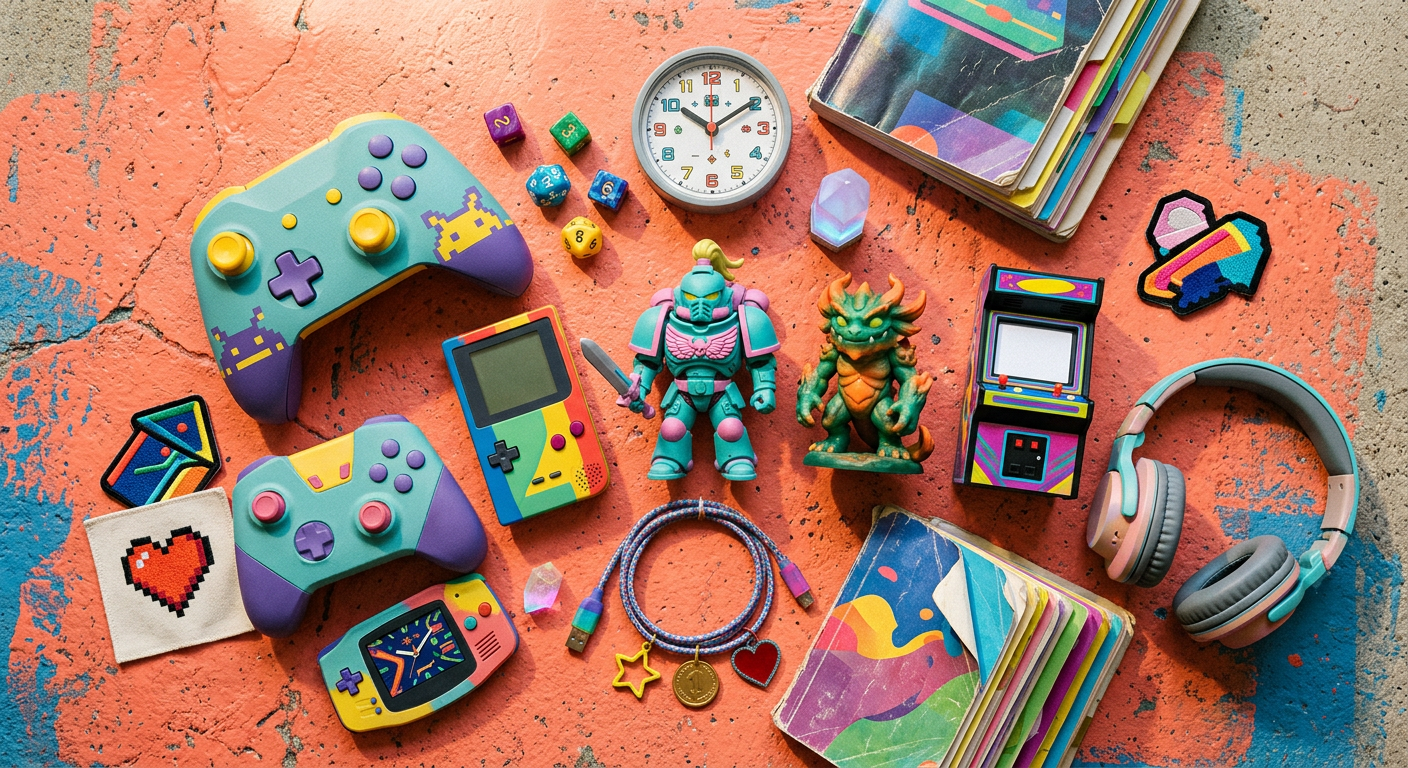


The line between pop culture and gaming is gone. It's not just about movie tie-ins; it's about a fundamental shift in how stars build communities and narratives, a logic Gen Z gets.
For years, the conversation around Hollywood and gaming was simple: a big movie gets a clunky video game tie-in, or a popular game gets a questionable film adaptation. But that era is over. Now, something deeper is happening. The actual logic of gaming—world-building, community, and interactive storytelling—is becoming the playbook for pop culture itself. As Young Hollywood has covered the evolving social lives of stars, we've seen the pieces of this new reality click into place, not in boardrooms, but in the wild.
This isn’t about slapping a gaming skin on a celebrity. It’s a fundamental shift in how stars, and the media around them, operate. It’s a language native to Gen Z, who grew up not just watching stories but participating in them, building worlds, and forging alliances in digital spaces. Now, they’re seeing that same energy reflected in the real-world antics of their favorite A-listers.
The New Social Sandbox
At the heart of modern gaming is the sandbox—an open world where you can follow the main quest or, more importantly, create your own fun with your chosen squad. We're seeing this play out as celebrities form unexpected and fascinating social circles that feel less like industry networking and more like a curated multiplayer session.
Think about Justin Bieber joining the Pittsburgh Steelers for a pre-game Bible study session. This isn’t a press-managed photo-op; it’s a genuine, slightly random collision of worlds that creates its own unique social ecosystem. It’s the kind of unexpected team-up that generates its own lore. When a police officer raiding Bieber’s home once compared it to a “frat house,” it inadvertently hit on this very idea: a self-contained social world, a home base where the squad gathers.
World-Building & Character Lore
Gamers are obsessed with lore—the backstory, motivations, and evolving narrative of a character. In 2024, celebrities are the main characters of their own public-facing sagas, and they’re getting smarter about how they control that narrative.
When Liam Hemsworth remained famously tight-lipped about his reported reunion with Miley Cyrus, he was essentially managing his character's story arc. By refusing to feed the content machine, he was curating the lore, forcing the audience to speculate and engage on a different level. It’s a power move straight out of a narrative-driven RPG: the silent protagonist whose actions speak louder than words.
This extends to real-life “crossover events.” When Sophie Turner introduced her then-new partner Joe Jonas to her family in London, it was more than just a relationship milestone. It was the merging of two distinct fandoms and worlds: British acting royalty and American pop-rock aristocracy. For a generation fluent in universe-merging events, this was a pop culture team-up of epic proportions, rich with potential for new stories.
IRL 'Live Events'
Gaming’s biggest innovation in recent years has been the “live event”—a moment in time where the entire community logs on to experience something together, whether it’s a concert, a map-changing explosion, or a holiday celebration. Pop culture is creating its own versions of these can’t-miss moments.
These aren't just awards shows. It’s the launch of a new holiday musical like Journey to Bethlehem, which becomes a seasonal touchstone for families and friend groups. It's an event designed for shared viewing and immediate discussion, a cultural appointment that temporarily syncs everyone’s attention. It transforms passive viewing into a collective, participatory experience.
Like a limited-time quest or a seasonal update in a game, these cultural events create a sense of shared urgency and community. You had to be there, and if you weren’t, you’ll be catching up on the highlights tomorrow.
Ultimately, this is more than a trend; it's the new reality. Pop culture has stopped talking at its audience and has started inviting them to play along. By adopting the core principles of gaming, it’s building a more interactive, engaging, and community-focused world. And for a generation that sees life as the ultimate open-world game, it makes perfect sense.
On This Topic
UP NEXT TO READ



GAMER SHOP