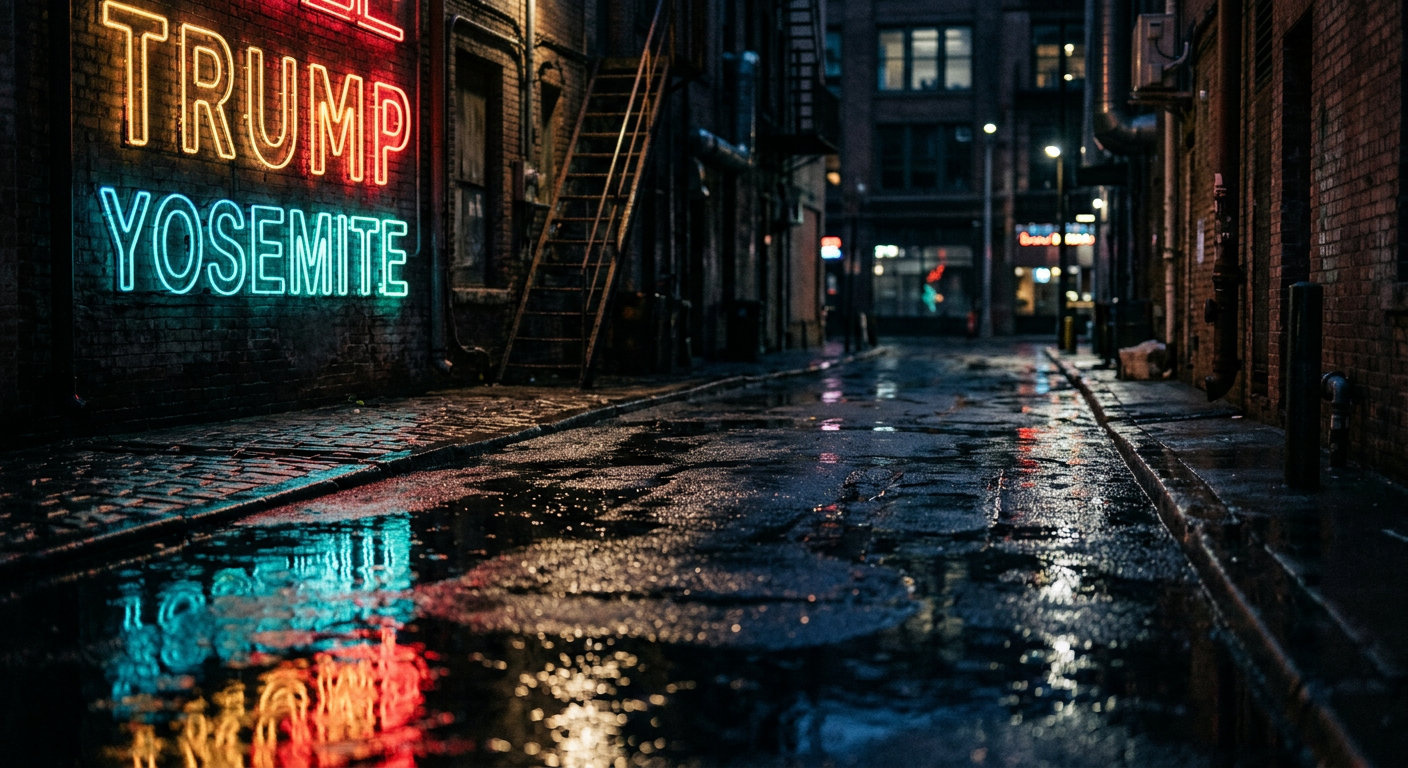


A single verbal slip-up regarding Yosemite National Park became an unstoppable internet phenomenon. We're breaking down how the 'Yo-semite' meme took over and why its creative legacy endures.
Here at Young Hollywood, we’ve charted the lifecycle of countless viral moments. Some burn bright and fade fast, while others embed themselves so deeply into the digital lexicon they become permanent fixtures. Few have achieved the staying power and sheer creative ubiquity of the “Yo-semite” meme, a trend built not on a perfectly crafted piece of content, but on a single, perfectly imperfect mispronunciation.
It’s the audio clip that launched a thousand travel vlogs, nature documentary parodies, and absurdist skits. For those who spend any amount of time on TikTok or other short-form video platforms, the sound is instantly recognizable. It has become a shared joke on a global scale, a simple punchline that requires no translation and seems to fit almost any context. But how did we get here? How did one word become an entire universe of content?
The Moment That Started It All
The origin story is surprisingly straightforward. The phenomenon began when former President Donald Trump, during a White House ceremony celebrating the signing of the Great American Outdoors Act, verbally stumbled. The bill itself was a significant piece of legislation aimed at funding the conservation of America’s natural treasures. In his remarks, while referencing one of the nation’s most iconic sites, he mispronounced Yosemite National Park as “Yo-semite.”
In the hyper-attentive landscape of the 21st-century internet, the moment was clipped, shared, and isolated almost instantly. It wasn’t the political context that grabbed users, but the simple, funny-sounding nature of the gaffe itself. The slightly sing-song, confident delivery of the incorrect name was audio gold. It was short, memorable, and ripe for remixing.
The internet, as it so often does, took this small, peculiar stone and started building a mountain.
From Sound Bite to Sensation
What happened next was a masterclass in modern meme culture. The audio clip became a detached entity, its origins almost secondary to its comedic potential. The most immediate and popular trend involved creators on platforms like TikTok laying the “Yo-semite” audio over majestic, sweeping footage of the actual Yosemite National Park. The contrast between the stunning natural beauty and the quirky mispronunciation was an instant comedic hit.
But it didn’t stop there. The creativity spiraled outward in every conceivable direction. People used the sound over videos of their pets looking regal, over clips from classic nature documentaries, or as the punchline to skits about misremembering simple facts. It became the soundtrack for travel montages to completely unrelated places, from the Grand Canyon to a local duck pond. The joke was no longer about the place itself, but about the grand, declarative sound of the word.
This is the essence of Gen Z humor: appropriation and re-contextualization. The audio became a tool, a piece of shared language that could be applied anywhere to signal a certain kind of ironic, low-stakes humor. It was a digital inside joke that everyone was suddenly in on.
Why The Joke Just Keeps Going
So why has this particular meme endured while so many others have vanished? The answer lies in its simplicity and its complete lack of malice. It’s fundamentally silly. The humor doesn't come from a place of political attack but from the universal experience of misspeaking. It’s funny because it’s a relatable human error amplified on a global stage.
Furthermore, the meme’s focus on Yosemite National Park connects it to something beautiful and aspirational. It inadvertently became a viral marketing campaign for one of America’s most stunning landscapes. The thousands of videos tagged with the sound are, in their own strange way, a collective love letter to the great outdoors, filtered through the lens of internet absurdity.
The trend demonstrates a key aspect of modern online culture: the ability to find common ground in the absurd. In a world of endless noise and division, a funny-sounding word offered a moment of collective, uncomplicated laughter. It proved that sometimes, the most powerful content isn't planned or produced; it's simply found.
The “Yo-semite” meme is more than just a viral clip; it’s a cultural artifact. It’s a testament to the internet’s relentless creativity and its power to turn a fleeting mistake into a lasting, joyful piece of our shared digital history.
On This Topic
UP NEXT TO READ


SHOP THE STORY