

Forget sterile libraries. Gen Z is embracing cafecore, turning coffee shops into hubs for work and creativity that prioritize environment, community, and that 'alone together' energy.
Walk into any given coffee shop on a weekday afternoon and you’ll see it. A sea of laptops, a few half-empty mugs, and a dozen faces bathed in the soft glow of their screens. Here at Young Hollywood, we see trends cycle constantly, but this one feels different. It’s not just a fad; it’s a fundamental shift in how a generation approaches work, study, and the very concept of a productive environment. This is cafecore, and it’s about so much more than just good lighting for your iced coffee.
This isn’t about “productivity theater”—the toxic need to be seen working hard. In fact, it's the opposite. It’s a quiet rebellion against the sterile silence of the library and the isolation of the home office. It’s about deliberately choosing an environment that feels alive, communal, and aesthetically pleasing as a way to actually get things done.
Welcome to the Third Place
The magic of cafecore lies in its embrace of the “third place.” It’s not home (the first place) and it’s not work or school (the second place). It’s that essential, neutral ground in between where you can feel like part of a community without any of the social obligations. It's the physical manifestation of the internet's promise of being “alone together.”
For a generation that has navigated a hyper-digital world, the third place offers a low-stakes return to the physical. There’s no pressure to perform, network, or even interact. You are simply another person with a task list, sharing space and oxygen with others doing the exact same thing. It provides a sense of belonging to a city and a neighborhood, a tangible connection that you just can't get from a Zoom call or a Discord server.
It’s All About the Curated Vibe
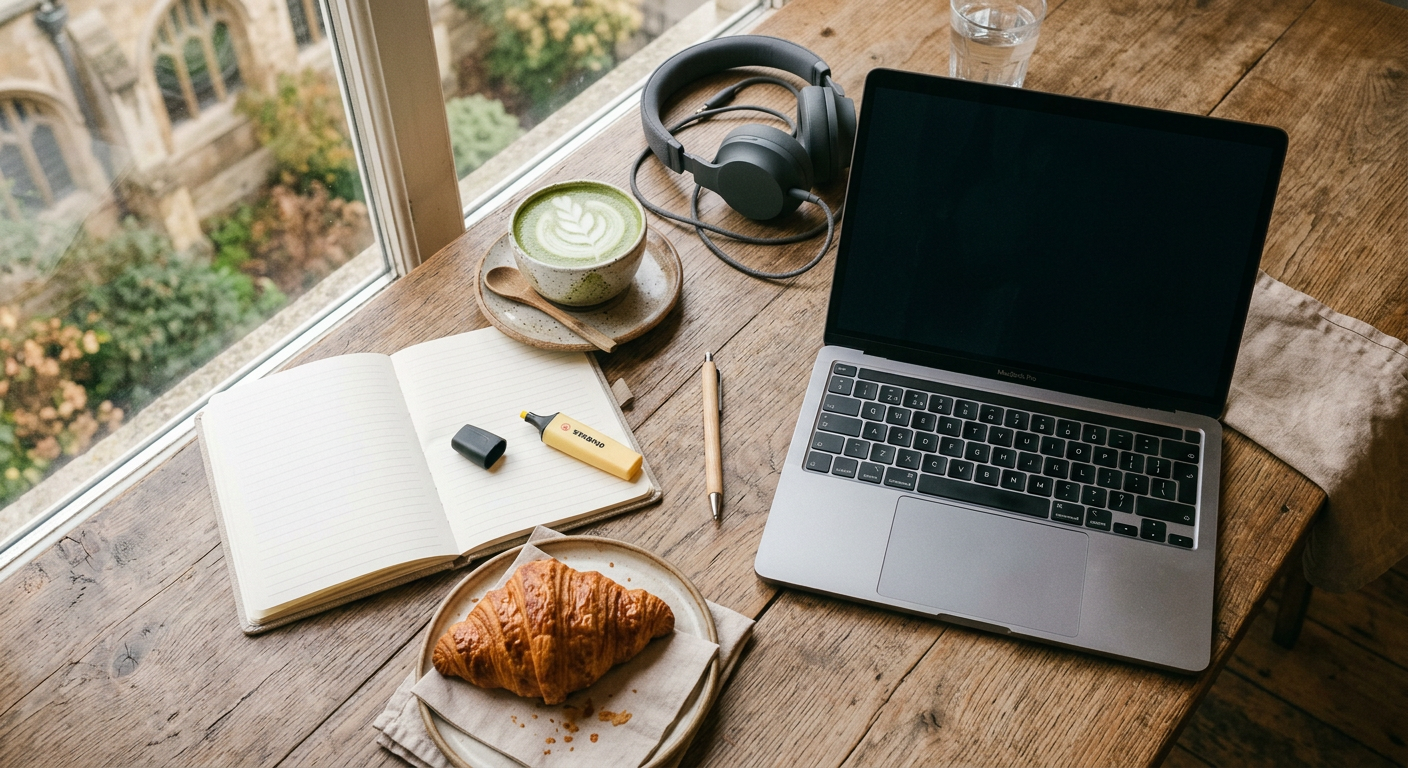
Let’s be honest: the aesthetics are a huge part of the appeal. Cafecore is a meticulously curated experience, even if it looks effortless. It’s in the laptop covered in stickers from indie brands and national parks—a visual resume of personality and taste. It’s in the deliberate choice of a vibrant green matcha latte, a drink that’s as much a prop as it is a source of caffeine.
These details aren't just superficial. They are rituals that transform a generic public table into a temporary, personalized sanctuary. They are small acts of world-building. By arranging your notebook, your pen, and your drink just so, you create a bubble of comfort and inspiration that makes tackling that daunting to-do list feel less like a chore and more like a creative session. It’s main-character energy for the mundane.
The Surprising Sound of Focus
Perhaps the most counterintuitive element of the cafecore movement is its soundtrack. For decades, the undisputed requirement for deep focus was silence. The library, with its strict rules and judgmental shushing, was the pinnacle of study environments. Now, the key to concentration is ambient noise.
The low hum of an espresso machine, the clatter of ceramic mugs, the indistinct murmur of a dozen different conversations—it all melts into a surprisingly productive soundscape. Unlike the jarring interruption of a single cough in a silent room, the constant, low-level buzz of a cafe creates a blanket of sound that can actually help you focus. It’s the real-world equivalent of a lo-fi hip-hop stream.
This background noise provides a vital sense of energy. It’s a subtle reminder that while you’re deep in your own world of lecture notes or spreadsheets, the larger world is still humming along right beside you. You are focused, but you are not cut off. You’re part of a living, breathing ecosystem, even if your contribution is just the quiet tapping of your keyboard.
Ultimately, cafecore is the perfect trend for our current moment. It’s a rejection of both the isolation of remote work and the performative hustle of the office. It’s about seeking focus not by shutting the world out, but by letting a specific, curated, and comforting slice of it in. It’s about building a better, more human-centered place to think.
On This Topic
UP NEXT TO READ


SHOP THE STORY