Russell Simmons on Hip Hop and Fashion
About this video
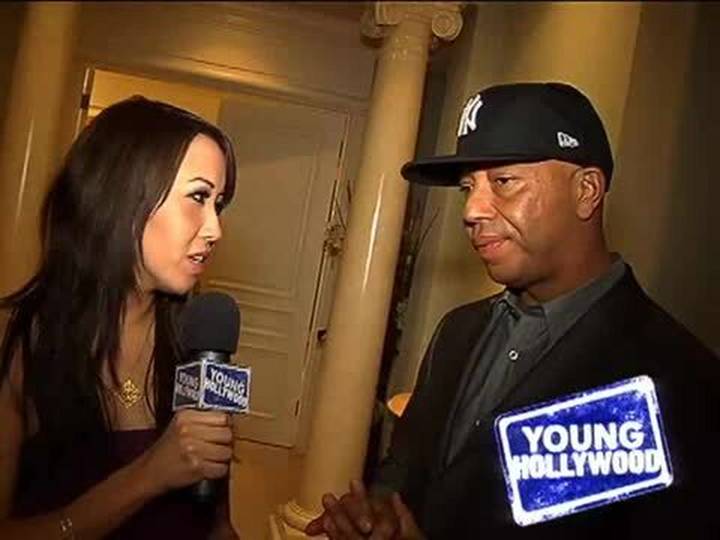
We hang out with Russell Simmons as he gives us his thoughts on Hip-hop and fashion.
Chapters (5)
Show ↓
Key Moments (4)
Show ↓
Key Topics (5)
Show ↓
- Russell Simmons
- Lagerfeld
- Snoop Dogg
- Elvis
- Chuck Berry
Full Transcript
Show ↓
Welcome to younghollywood. com.
Hey everybody, I'm here with Russell Simmons.
Well, you're definitely an icon and especially with style, when did you first decide you wanted to get in fashion?
That's about 20 years ago and I was at a fashion show.
It was all these cool inspirations from hip-hop.
Like, there like, I think it was Lagerfeld had these giant door knocker earrings and these big gold chains.
So, that's kind of the way hip-hop was inspiring or influencing American fashion.
It was like their translation was, you know, very exaggerated.
My translation was a little closer to the street, right?
So for me, I wanted to to do it seem like they were a big boy.
There's a lot of talk about it, a lot of, you know, music played in some of the shows, but there was really no um, designer who spoke that language.
And so that's what I did in the beginning.
Yeah.
Celebrity and fashion go hand in hand now.
What do you think about that?
You know, there's something incredible about someone who puts their heart into something for lots of years.
So it's very nice when celebrities choose your brand and it's very nice when celebrities choose to use or not celebrity, talent and people choose to express themselves through design.
You've seen hip-hop evolve over the years.
Where do you see it heading now because obviously a lot of different genres are, you know, fusing together now.
Hip-hop is a is a whole language.
It's not just, you know, music.
It's not just dance, it's not just poetry or or or, you know, it's kind of a whole language of this uh last generation.
Like, you know, if you think of blues, think of jazz, think of rock and roll.
In order for America to allow them to move forward, it was people who were slurring that were borrowing these ideas and recreating them in good ways, great artists.
But the first expression never really got to crossover.
But in a in rap it's very, very different because you have a Snoop Dogg on MTV.
You know, it's not like you have to have only have an Elvis, you could also have a Chuck Berry.
But it's the same.
I mean, it's exactly the same.
It's like people who are locked out expressing ideas that mostly the mainstream didn't understand or doesn't understand.
But they come to learn from from Beverly Hills what they're thinking about in Compton.
So it broke down racial and other kind of barriers.
Because then you get to see people and, you know, and kind of relate to them.
And I think that's really what happened.
I think that that's how the president got elected.
It's Russell Simmons, I'm with Young Hollywood, and we're going to take this and put it on Global Grind while we at it.
It's family, right?
Timestamps are approximate — click one to jump the player.
PEOPLE MENTIONED
- Russell Simmons
The primary interviewee discussing hip-hop and fashion
- Lagerfeld
Mentioned as a designer who adopted hip-hop inspirations
- Snoop Dogg
Cited as an example of a rapper achieving mainstream visibility
- Elvis
Used as a comparison for mainstream crossover artists
- Chuck Berry
Used as a comparison for artists expressing unique ideas