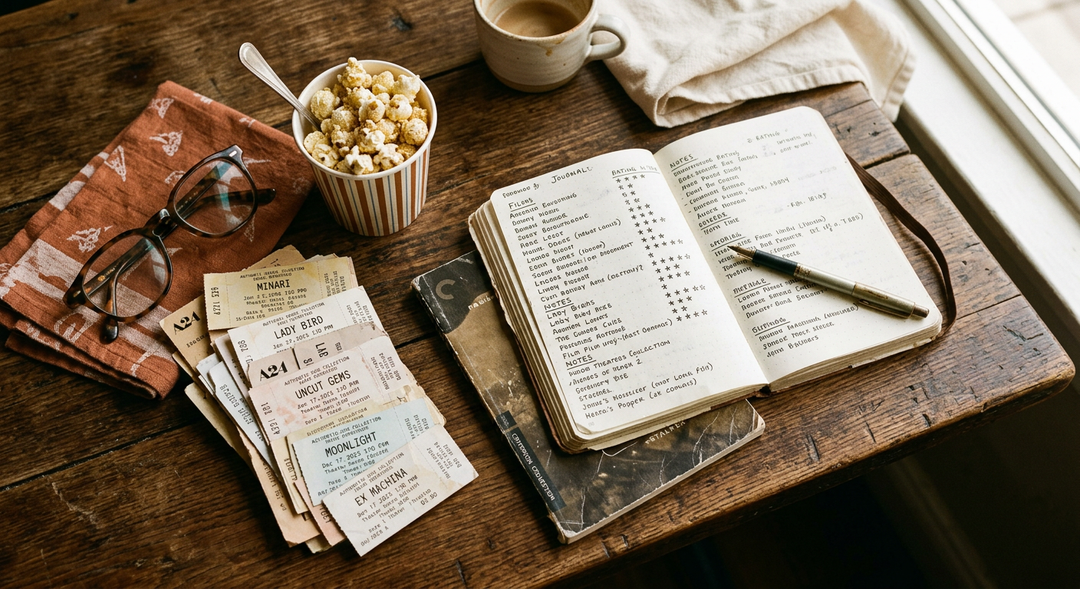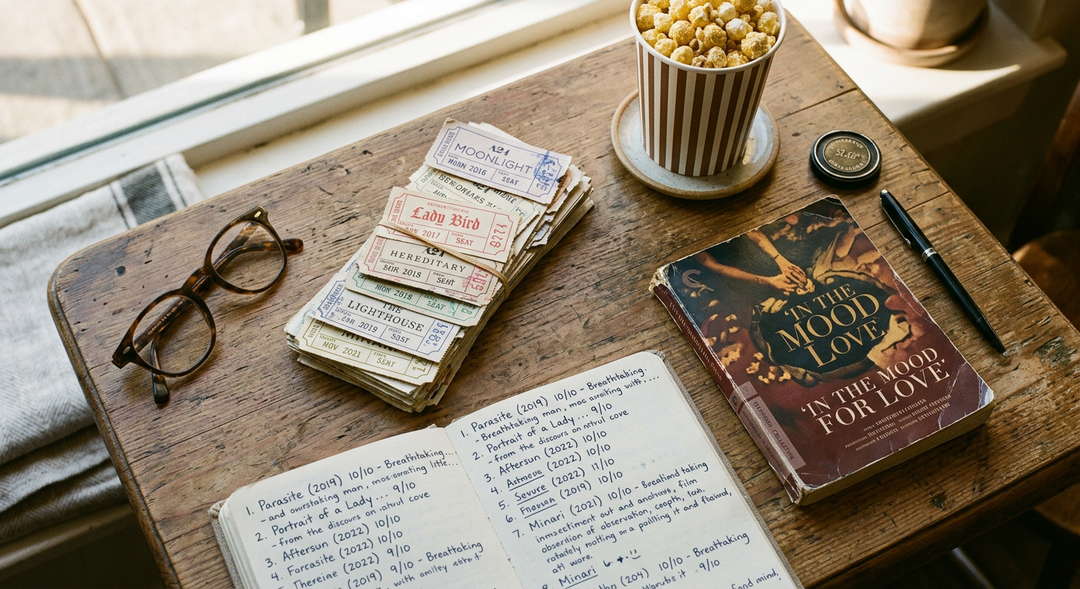
Forget your star sign. Gen Z is using the film app Letterboxd to define their personalities, one ironic five-star review and curated 'four favorites' grid at a time.
Forget “what’s your sign?” — the only question that truly matters right now is “what are your four favorites?”
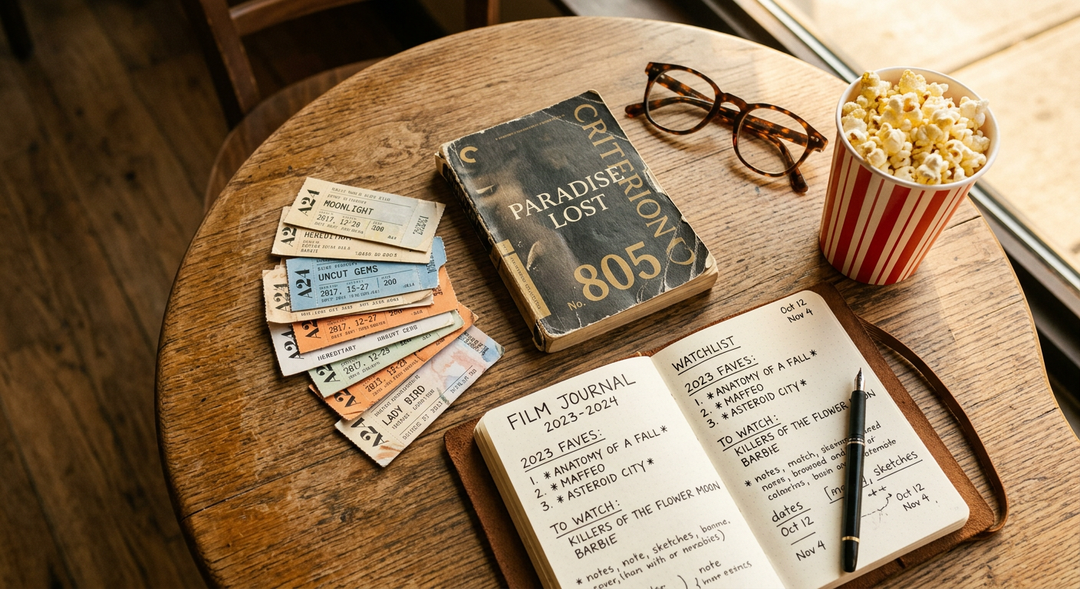
If that question means nothing to you, you haven’t been paying attention to the little green-and-black app that has completely rewired youth culture’s relationship with movies. Letterboxd, once a niche digital diary for cinephiles to log films, has officially completed its transformation into the definitive personality test for a generation. It’s no longer just about what you’ve seen; it’s about what your watchlist says about you. The app has become a social grammar, a dating prerequisite, and a public-facing mood board where your choices are your character.
The Four Favorites: An Auteur Astrology Chart
At the top of every Letterboxd profile sits the holy grail of personal expression: a grid of four movie posters. These are your “favorites,” and the curation of this tiny digital shelf is a high-stakes game. This quartet is your mission statement, your aesthetic manifesto, your emotional resume. It’s the first thing anyone looks at, and it’s judged with the intensity of a final exam. Do you go with unimpeachable critical darlings like Parasite and Everything Everywhere All At Once to signal you have taste? Do you throw in a beloved animated film like Spider-Man: Into the Spider-Verse to show you have heart? Or do you pick four obscure European horror films to prove you’re not like the others?
The combination is everything. It’s a delicate alchemy of prestige, irony, nostalgia, and vulnerability. A profile with The Godfather, Pulp Fiction, The Dark Knight, and Fight Club says one very specific thing. A profile with Portrait of a Lady on Fire, Aftersun, Past Lives, and something from director Celine Sciamma says another thing entirely. Unlike a Myers-Briggs type or a zodiac sign, which is assigned to you, your four favorites are a conscious, curated choice. It’s an active declaration of identity, not a passive one, which is why it feels so much more personal and revealing.
Speaking in Five-Star Irony
Beyond the favorites grid is the ecosystem of the reviews, which has little to do with traditional film criticism. The dominant language of Letterboxd is the one-line, meme-ified takedown or proclamation of love. These aren't thoughtful essays; they're gut reactions tailored for maximum impact and relatability. A review for a harrowing drama might just be, “well that’s certainly a movie that i watched,” while a fun action flick could earn a simple, “the vibes were immaculate.” It’s a performance of wit, a competition to see who can distill the entire cinematic experience into a single, perfectly crafted, context-aware sentence.
This has given rise to a complex and often hilarious rating system. A five-star rating doesn't necessarily mean a film is a masterpiece of cinema. Giving five stars to Paddington 2 is a universally understood sign of sincerity and good taste. Giving five stars to a notorious bomb like Gigli is a specific, ironic gesture that telegraphs a certain kind of online-native humor. The star rating is no longer just a measure of quality; it's a tool for communication. It’s about being in on the joke, and the joke is that we all know a “perfect” five-star movie is very different from a movie that’s five stars to me.
The Ultimate Social Vibe Check
So how did a personal movie log become a cornerstone of modern social life? It became the ultimate vibe check. The Letterboxd profile link is now a staple in bios on X (formerly Twitter), Instagram, and, most importantly, dating apps. It’s a remarkably efficient way to pre-screen for cultural compatibility. Before you even swipe right, you can find out if a potential match’s favorite comfort movie is a cheesy rom-com or a bleak Scandinavian thriller. It’s a low-stakes, high-reward way to figure out if you’ll have anything to talk about, or argue about, on a first date.
Shared taste, especially for films that feel personal or slightly outside the mainstream, creates an immediate and powerful sense of connection. Discovering that someone else not only loves but understands why you have an obscure 80s fantasy film in your favorites fosters a bond that a shared love for pizza simply can't. It’s about finding people who speak your same cultural language, who were moved by the same things you were, whether it’s the chaotic genius of the Daniels or the quiet heartbreak in a Greta Gerwig film.
This turns the app from a simple utility into a community-building machine. It’s less about gatekeeping cinema and more about finding the gatekeepers who have the same keys as you. In a fragmented digital world, Letterboxd provides a common ground built on one of the most powerful connectors we have: the stories we love.
In the end, Letterboxd has proven that what we choose to consume and celebrate says more about us than any crafted bio ever could. It has gamified taste, turning it into the most valuable social currency for a generation fluent in curation. It’s no longer just an app; it’s a living, breathing resume of the soul, one logged film at a time.