It's the new social grammar for the under-35 crowd. We explore how Gen Z transformed Letterboxd from a simple film-logging app into the ultimate identity statement.
Forget “what’s your sign?” — the real question on everyone’s lips is “what are your Letterboxd faves?” If you’ve been on a date, to a party, or even just scrolled online in the last few years, you’ve felt the seismic shift. The casual get-to-know-you query has evolved, and your cinematic soul is now on display, distilled into a curated grid of four movie posters.
What was once a niche tool for hardcore cinephiles to log, rate, and review movies has exploded into a mainstream cultural phenomenon. Letterboxd isn't just an app anymore; it’s a language, a Rorschach test, and the primary text for understanding a generation. Gen Z, in its infinite creativity, has taken a simple database and transformed it into a sprawling, vibrant, and often hilarious canvas for personal identity. It's where your taste in film becomes a direct stand-in for your personality.
The Four Favorites Face-Off
The profile's most sacred real estate is the “Four Favorites” section. This tiny grid of four films has become the digital equivalent of a vintage band t-shirt, a carefully chosen bumper sticker, or a tattoo. It's a declaration. A mission statement. It’s the first thing anyone looks at, and in the unspoken social calculus of the internet, it’s everything. Hours can be spent agonizing over the perfect lineup, a process as serious as crafting a college application essay.
Your choices broadcast a very specific vibe. Are you an A24 connoisseur showcasing Everything Everywhere All At Once alongside Moonlight to signal your impeccable modern taste? A classicist with Casablanca and The Godfather? Or maybe you're a provocateur, slapping four Nicolas Cage movies up there with zero irony. Each combination tells a story. One user’s favorites might scream “hopeless romantic who loves sad European films,” while another’s says “I only watch movies that are over three hours long and have ambiguous endings.”
Even mainstream figures like Ayo Edebiri or Paul Mescal are often discussed through the lens of their filmographies and cinematic sensibilities, proving that this deep love for film culture has fully permeated the zeitgeist. Your faves are your flag, and you plant it for all to see.
The Art of the Micro-Review
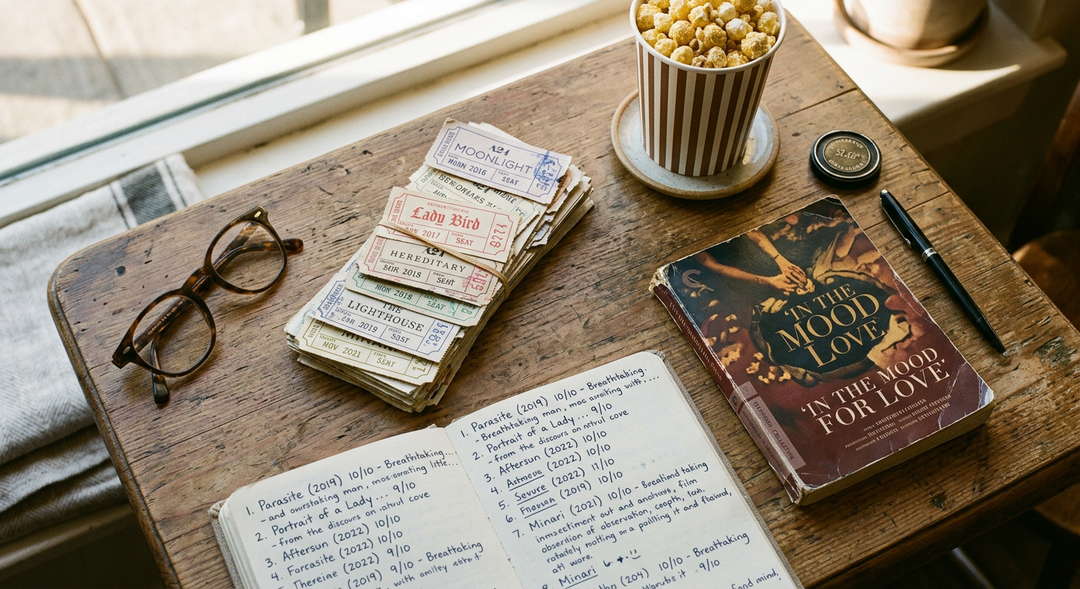
If the Four Favorites are a static profile picture, the reviews are the ongoing conversation. But don't expect long, academic paragraphs dissecting cinematography. The review culture on Letterboxd is a genre unto itself, a masterclass in brevity and wit. This is not your grandfather’s film criticism; it's a mosh pit of memes, personal confessions, and one-line zingers that are often more entertaining than the films themselves.
A critically-panned blockbuster might receive five stars with the simple review, “The vibes were immaculate.” A devastatingly sad drama might get one star and the comment, “Made me feel things, did not ask for this.” It’s a space where a review for the movie Saltburn might just be a cryptic, spoiler-adjacent diary entry, or a review for Barbie could be a dissertation on modern feminism. This style of reviewing has turned film criticism from a top-down declaration into a bottom-up conversation, where every feeling is a valid critique.
This reinvention of the review format is pure Gen Z. It rejects pretension in favor of authenticity, humor, and relatability. Why write 1,000 words on thematic structure when you can simply say, “this movie is my entire personality”? In a world saturated with content, Letterboxd users have mastered the art of the punchline, turning movie-logging into a performance art.
Curation as Community
Beyond the individual profile, Letterboxd thrives on its social ecosystem. Following another user isn't just about getting film recommendations; it's about finding your tribe. When you stumble upon a profile with the same obscure Giallo horror film in their favorites, you’ve found a cinematic soulmate. The real magic, however, lies in the user-created lists.
These lists are the lifeblood of discovery on the platform. Forget genre tags; we now navigate the world of film through vibes. Lists like “Movies that feel like a Sunday morning,” “Certified Sad Girl Cinema,” or “Films where the title is spoken in the movie” create new, hyper-specific canons. They build a shared cultural shorthand, allowing users to connect over niche aesthetics and emotional landscapes. It’s a far cry from the algorithm-driven recommendations of streaming giants; this is human-to-human curation, and it fosters a genuine sense of community and shared passion.
Ultimately, Letterboxd's ascendance isn't just about movies. It’s about a deep, human need for connection and self-expression in a digital world that can often feel isolating. Instead of manicured photo dumps or performative career updates, Gen Z has found a way to say, “This is me,” through the art they love. They didn’t just adopt a platform; they hijacked it, imbued it with their humor and heart, and turned it into the most interesting social network on the internet. Your watchlist has never been more revealing.