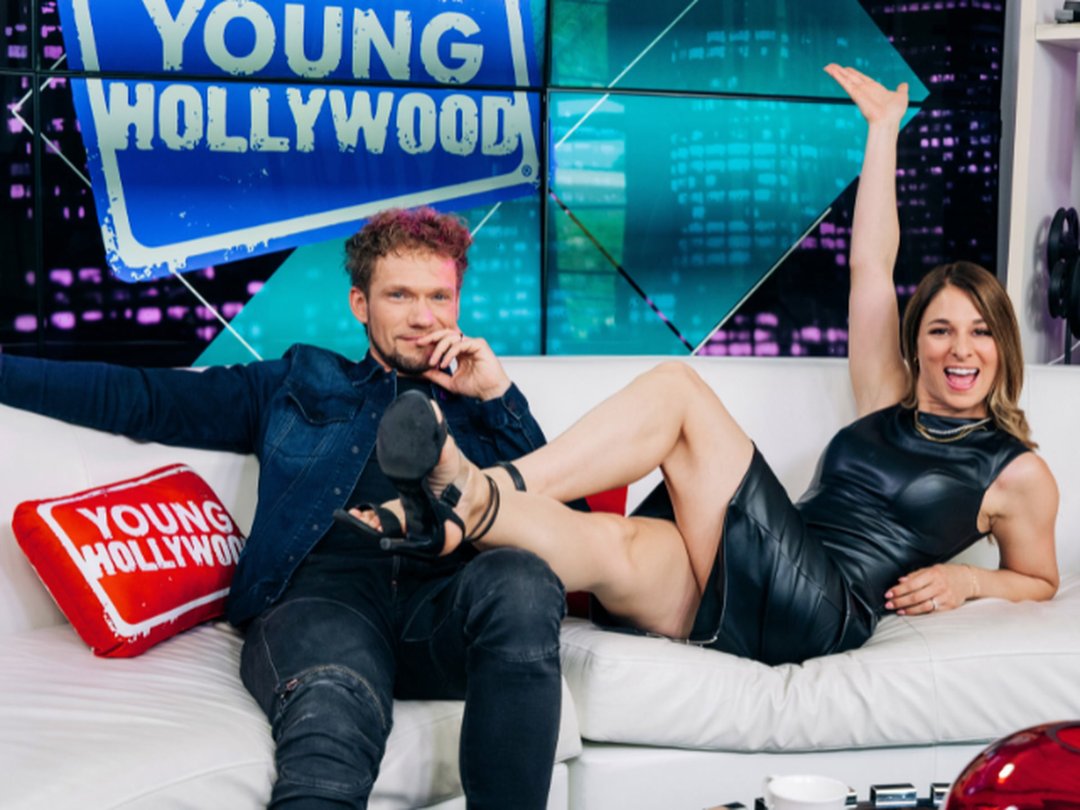
Runningbear Talks Life Growing Up on an Indian Reservation as Part of The San Manuel Tribe
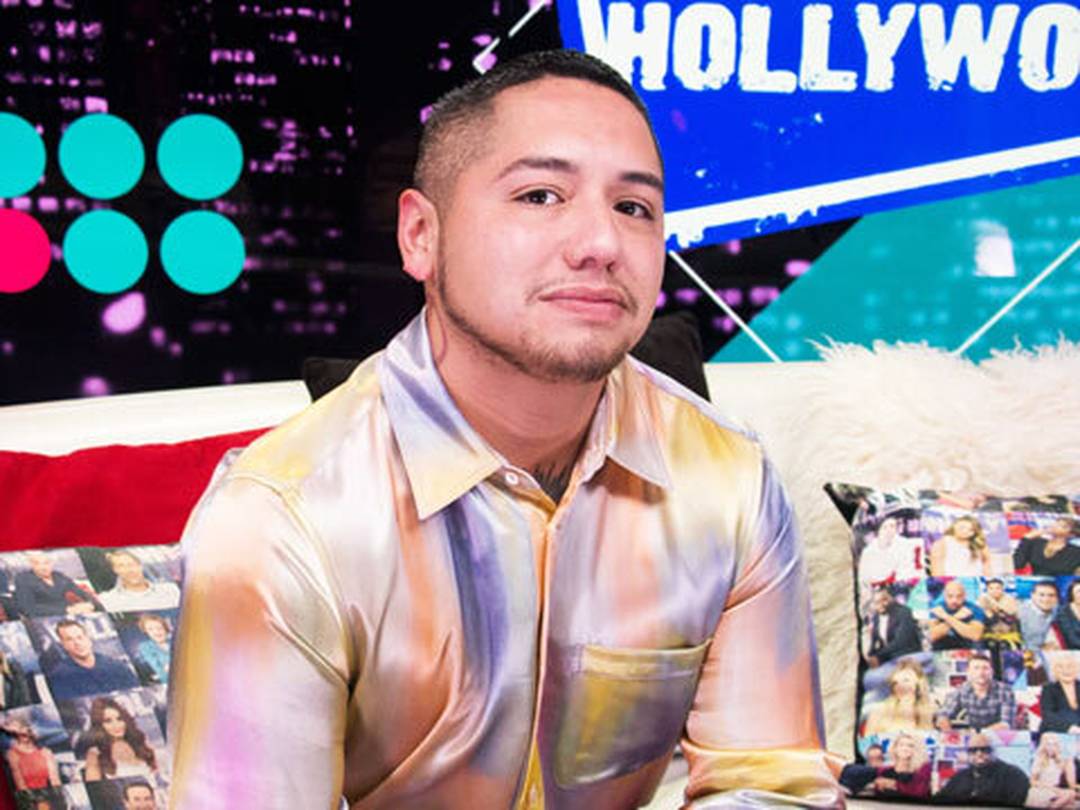
About this video
When you hear the name "San Manuel", especially if you live in California, more than likely your thoughts immediately go to the Casino. But the San Manuel Band of Mission Indians are the force behind the business, and they have been working hard for years to support not only their own tribe but other Native American communities all over the country. Runningbear Ramirez pays a visit to the Young Hollywood Studio to discuss his tribes various business endeavors and charitable efforts, as well as sharing his love for fashion and what it's like to grow up on a Native American Reservation!
Chapters (7)
Show ↓
Key Moments (5)
Show ↓
Full Transcript
Show ↓
Hey guys, it's Tracy Bear here in the Young Hollywood studio and I am sitting with Running Bear Ramirez. How are you?
I'm doing well, how are you?
I think that we might be like long lost relatives because my last name is Bear. Spelled differently probably, it's B E H R.
Oh, yeah. Yeah. But
That's cool. No, you never know. You never know, right? It's such a small world. Where are you from?
I'm from Texas.
Oh, wow. Yeah. Nice. But I actually, I kind of wish I was actually related to you because your whole life story is just so fascinating to me.
Thank you.
So, I mean you're Native American, you're part of, you know, the San Manuel Band of Mission Indians Tribe, which is just so fascinating to me because I mean not many people can say that they grew up in a tribe on a reservation. So, I'm just like, what's sort of the history with, you know, your family? I know it's been around since like the 1800s.
Yeah. Well, so our tribe was uh there was 32 of us left in 1891 when we were recognized by the federal government. Now that we're we're at the position that we are now with the casino and all our philanthropy work, it's nice to be able to have that history and to let people know about it because um it's like you said, it's it's rare to be able to to have those conversations with people and make them meaningful. So, um I'm really appreciative of everything I'm able to do.
Just kind of give us like a experience of what it was actually like for you growing up on a reservation. Like what are some of like the traditions that you had? Did you
So for me, when we have our burials or ceremonies um I'm a digger, so I'll be out there at 3:00 in the morning um digging the hole.
Oh, wow.
Yeah, um but it's tradition. It really brings closure to the whole situation. Um you're able to experience all the emotions that go through, you know, a funeral, losing a loved one. Um but you're you're actually putting in the work to celebrate your family. So, I I appreciate what we do there. I sit on the board for Indian Health Services. Um we make sure that Native Americans get health care in San Bernardino and Riverside County. Uh there's nine different tribes that we work with um just here in California. And uh we're always going to Sacramento and Washington, D. C. making sure that we get the budgetary needs we need. It's a lot, it's a lot going on.
Yeah. That's amazing. I just want to like the work that you guys actually do and you know, I know it's not just for your community but it's for just many communities.
Yeah. Yeah. Well, we have 18,000 patients uh in in Indian Health Services in here. So, it's um when we do travel, we go, you know, Milwaukee, Alaska, all these different places to go meet with other tribes and uh see how they're doing their jobs over there. It's a great opportunity. Especially if you can get the job like, you know, it's it's a pretty good one. You have to be appointed from your tribe uh so they take a vote. Your whole tribe has to vote on it.
It's You kind of have like your own like government, your own system going on, right? It's like its own separate world the way it runs.
Yeah. Technically, yes. All all tribes are different. Uh for us, uh because we are smaller, um we're able to have a little bit of political influence because we're smaller but we have a lot of um pull. That's something that I wasn't quite ready for being so young. Uh I was on the board when I was 21 and I got off for a little while and I'm back on now. It's definitely a learning experience.
I wasn't doing stuff like that when I was 21 for sure. Um but I know like even like you've said like your dad is a huge influence for you and he was really influential in, you know, the politics especially in California, right?
Yes. Uh so Prop 5 and Prop 1A, he was uh very influential in getting those passed for Native American gaming. Um he was the chairman, the vice chairman, he was the general manager of the casino. He made sure that we had it in us to work and um appreciate what we have because there's a lot of times that, you know, you get uh used to it. You get complacent. You don't you don't really want to work for things you have because you have this coming in all the time. But uh for me, I worked in accounting when I was 13. My dad made me work in checks payable, accounts payable. Um just making sure that I was really involved. It really did uh drive who I am now. Um being able to work with my dad and do all those different things.
So what are like some of the businesses that your tribe's involved in? Uh so besides some of the ones you said.
We have the casino. Working with charities, I work with Project Angel Food. I sit on the board for that as well. I ended up doing a uh a donation, a grant for uh Project Angel Food to start a study to see if their meals would bring down A1C levels in diabetic Native Americans.
Oh, wow.
Yeah. So it's a pilot program we're getting started and um I'm hoping to show that the research that we do um can prove that it works and uh it'll be taken national. So
That's incredible.
It's a great opportunity.
Why I mean I know that you're, you know, charity this is, you know, something that's so important to you and you're actually starting your own foundation? Is that right?
I'm right now, I'm in talks with with Gucci and Project Angel Food to do a uh charity event um in 2020. People will be able to come and shop and proceeds go from that to Project Angel Food. I'm really proud of being able to work with the different fashion houses because uh when I was 13, I started going to Louis Vuitton and working with some of the people there and I was going to get into the fashion because obviously, I mean, we gotta talk about this whole getup situation here. I feel like a melting ice cream.
Yeah. you know, someone from a tribe on a reservation to like be into fashion. Like you're so fashion forward. Oh, yeah. So, I'm curious what's how you even got so passionate about this fashion.
Yeah, so I started working with uh Louis Vuitton when I was 13. Well, I started shopping there when I was 13 and uh from there uh one of the uh employees kind of took me on my ride through LVMH, working with Fendi, uh Louis Vuitton. Now I'm with Gucci with Gucci.
Oh, wow.
Yeah. You're right. I'm Native American guy, young kid didn't had no fashion anything in my head.
Like what's like a traditional like when growing up like what do you do you wear? Like a traditional outfit?
Well, so I uh yeah, I wear ribbon shirts. Uh it's just just a shirt with some ribbons on it but they're traditional. Actually one of the outfits I have planned for Fashion Week in January is going to be a uh a ribbon shirt but it's it'll look like a train so it'll the ribbons will flow off me. Yeah. Down to the ground.
That's amazing. And you like you help design these yourself, right? That's so crazy.
Yes, definitely.
That is cool that you can represent your culture just also like through your style, you know, which is which is really, really fascinating. Is there any like piece that you've worn or that you've that's just like the craziest thing you've ever tried wearing?
I have a Jason of Beverly Hills. I designed it, he made it for me though. A headband made of uh black diamonds, white diamonds and amethyst. And uh they hang. So it's a beautiful piece of work. Uh but that's the one I go to for my big events. I'll go straight to that headband and because the one in the the headband itself in the middle is something my dad gave me, beaded and it was supposed to be part of my uh my regalia, my outfit for dancing but I never got into the dancing. So bad. It's it's so different outside of that um because in the real world um off the reservation it's, you know, so different, so, so different. Once you're on the reservation though it's uh it's a culture shock for a lot of people.
Like how does that work? So you have I mean if it's so it's just your family on this. And so
Just my family.
Wow. That's
Yeah. So
And how big is it?
They only give us two square miles um when we were given our land but over time we've been able to uh acquire land around us. So recently we just uh purchased the Arrowhead Springs Hotel. It is a hotel from the 40s. Uh beautiful condition but it hasn't been used in a long time. And that ancestral land is ours. So we just wanted the land. It just happened to come with this beautiful hotel. So uh Elizabeth Taylor had her honeymoons there.
Oh, wow.
Yeah. Uh Yeah. A lot of history. Yeah. It was actually a studio um from out here created it to have their their stars be able to relax. Um but then Palm Springs became a thing and they stopped going there so much.
I just want to ask your opinion because I know this story was very important to you growing up. Um so I'm going to read it and I just want you to sort of just explain, you know, what the meaning behind it is. Okay. So there's a treasured Cherokee timeless tale where an old wise man is teaching his grandson life fundamentals.
In this dialogue, he explains that there is a battle inside of him between two wolves. One epitomizes good, the other epitomizes evil. Upon hearing this, the grandson pauses to think and then he asks, which wolf will win? The elder Cherokee simply replies, the one that you feed. Yeah. Very deep and I know there's got to be some meaning behind it. So
Well, when I was young, I was we were poor. Um very poor. And uh I feel more than blessed to be able to say I have all this knowledge of growing up without and being able to have now. And I feel that not having has actually helped me become a better person all over the way around.
Yeah. Definitely. That's that's incredible. Well, the fashion world is going to be taken over pretty soon by this guy right here, right? Hopefully. Running Bear takes over the world of fashion, plus a million other things.
Yes. As many as I can handle.
I think we'll be seeing a lot more of some interesting things that you're going to be doing.
Hope so.
So, well thank you. Thank you so much for coming. It was so great talking. Great time. Thank you. Thank you.
Timestamps are approximate — click one to jump the player.
PEOPLE MENTIONED
- Tracy Behr
Host of the interview with Runningbear Ramirez
- Runningbear Ramirez
Interview subject, member of the San Manuel Band of Mission Indians
- Elizabeth Taylor
Had honeymoons at the Arrowhead Springs Hotel
FAQ
What is Runningbear Ramirez's tribal affiliation?+
What charitable work does Runningbear Ramirez do?+
What is Runningbear Ramirez's connection to fashion?+
What significant property did the San Manuel tribe recently acquire?+
What is the meaning of 'The Two Wolves' tale that Runningbear shared?+
MORE FROM YH STUDIO
Hand-picked by the Young Hollywood editors — the stories shaping YH Studio this week.
Madisyn Shipman's Journey From Game Shakers To The Playboy Club
Nia Sioux on Falling In and Out of Love With Dance
Skyler Gisondo on Bringing Jimmy Olsen to Life For James Gunn's Superman