
I give a lot of credit for my love of film to Chris Stuckmann, YouTuber-turned-director who got his start "Stuckmannizing" viewers with his film reviews. Stuckmann’s directorial debut Shelby Oaks just hit theaters, inviting audiences into a world of mystery, grief, and found footage horror.
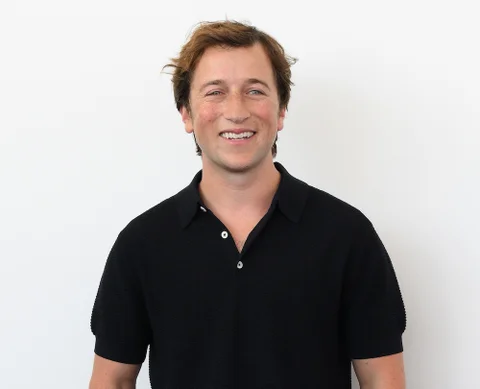
Born in Boston Heights, Ohio, Chris Stuckmann is an American YouTuber, filmmaker, author, and critic who has spent more than a decade shaping how an entire generation talks about movies. With over 2 million subscribers and nearly 800 million views, he’s one of the most recognizable film voices online. His reviews, which are earnest, respectful, and deeply cinephilic, were inspired by the legendary TV program "Siskel & Ebert at the Movies" (starring the late Roger Ebert and Gene Siskel) where he first discovered the idea of debating films without cruelty.
Stuckmann published The Film Buff's Bucket List (2016) and Anime Impact (2018) and directed the short "Auditorium 6". His lexiconic levels of knowledge and passion to see every film, no matter how small, made him one of the most respected film commentators on YouTube. But even in his most analytical videos, it was clear: he didn’t just love movies, he wanted to make them.
Stuckmann’s path to filmmaking began in secret. Raised as a Jehovah’s Witness, he wasn’t allowed to watch most movies, sneaking viewings of Signs and Star Wars as a kid. That childhood fascination would later become his creative calling. In 2021, Stuckmann uploaded a vulnerable video sharing his negative experiences with the religion, his departure from it in his twenties, and his coming out as pansexual. The honesty and bravery in that video reframed him not just as a critic but as an artist willing to lead with empathy and truth. That same video also came with an announcement of Stuckmann’s directorial debut, to be titled Shelby Oaks.
In 2021, Stuckmann made a major announcement: he was shifting focus away from reviewing movies and toward making them. "I don’t want to talk negatively about filmmakers anymore," he said in a video titled "Moving Forward". "It would be strange for me to be making movies and also trashing filmmakers." That statement captured the essence of Stuckmann’s evolution, his empathy for storytelling, and his understanding of how hard it really is to make a film from the ground up.
Soon after, he signed with the Gotham Group and launched a Kickstarter campaign for Shelby Oaks, his first feature. The campaign shattered records, becoming the most-funded horror film in Kickstarter history, raising nearly $1.4 million. The massive support from fans was communal, a collective push to help one of YouTube’s most beloved critics realize his cinematic dream. With horror icon Mike Flanagan, Trevor Macy, and Melinda Nishioka joining as executive producers under Intrepid Pictures, and Neon securing distribution, Shelby Oaks went from a passion project to one of the most anticipated horror debuts of the year.
Shelby Oaks opens as an unsolved mystery documentary, echoing the true crime and found footage formats that dominate streaming. The film follows Mia (Camille Sullivan), a woman desperate to find her sister Riley (Sarah Durn), a YouTuber who vanished while investigating the ghost town of Shelby Oaks, Ohio. Riley’s last known footage shows her and her team, the "Paranormal Paranoids", uncovering something unearthly in the woods. The rest of the crew was later found dead.
Stuckmann’s direction balances atmosphere and emotion with precision. There are gliding camera movements, sudden shifts from day to night, and a persistent tension that builds until it becomes unbearable. The film is both an homage and a reimagining of the found footage genre, especially The Blair Witch Project (1999). The film knows the tropes but plays them straight, treating them with sincerity rather than irony. Sometimes, however, the film becomes overly referential and derivative, banking on a collective knowledge of found footage and its trope instead of reinventing them. This is where Stuckmann’s cinephilia falters.
In her breakout role, Camille Sullivan delivers a powerhouse performance, grounding the story’s supernatural elements in grief and obsession. Critics like Alison Foreman of IndieWire praised the film’s "near-legendary knowledge of pop culture" while The Hollywood Reporterlabels the homages as "stilted and generic", reminding us that Stuckmann is a first-time director with much to learn. The film’s first half, with its DIY investigation style and emotional weight, feels fresh and alive. Even if the final act leans on familiar genre beats, Shelby Oaks never quite loses its pulse, and it’s proof that Stuckmann has the instincts of a born storyteller.
Like The Blair Witch Project before it, Shelby Oaks has embraced digital-age marketing to build its legend. Neon’s viral campaign included mysterious websites and coded social media posts that blur the line between fiction and reality, giving audiences the thrill of uncovering the unknown before they even step into the theater.
In an era dominated by sequels and cinematic universes, Shelby Oaks stands as a love letter to original horror, crafted not by a studio executive but by a lifelong fan who made good on his dream. Chris Stuckmann’s debut reminds us why we fell in love with scary movies in the first place: not for jump scares or gore, but for the stories that haunt us long after the lights come up.
Shelby Oaks is in theatres now!
On This Topic